Posts

Upholding Equality and Freedom: Why LGBTQ+ Rights Matter

Image
Today, I want to draw attention to a matter close to my heart: the fight for equality and freedom for LGBTQ+ individuals. As we celebrate Pride Month, it's disheartening to witness the challenging environment in which this celebration takes place. Discriminatory legislation, hateful rhetoric, and media biases pose significant barriers to progress. Let's delve into these issues and explore why LGBTQ+ rights matter now more than ever. The Corporate Paradox: American corporations often display support for the LGBTQ+ community, seeing it as a way to enhance their brand image and attract a wider customer base. However, when faced with protests or backlash, many of these companies quickly retreat from their proclaimed values. This contradictory behavior raises questions about the authenticity of their support and highlights the need for genuine and unwavering commitment. The Rise of Discriminatory Legislation: One of the most alarming trends we've observed recently is the surge i...

Target's Decision to Remove Pride Month Display: A Missed Opportunity to Stand Against Hate

Image
In recent years, the LGBTQ community has made remarkable strides towards equality and acceptance. Pride Month, an annual celebration of love, diversity, and self-expression, serves as a powerful symbol of progress.  However, when retail giant Target decided to remove its Pride Month clothing display due to incidents of violence by bigots, it sent a disappointing message of capitulation. In this article I will explore why Target's decision is a missed opportunity to support the LGBTQ community and how it can foster a more inclusive society. 1. A Celebration of Love and Diversity: Pride Month is a time for LGBTQ individuals and their allies to come together in celebration. By showcasing Pride-themed clothing displays, Target not only acknowledges the importance of inclusivity but also sends a powerful message of support to the LGBTQ community. Removing the display undermines the spirit of Pride Month and sends a signal that hate and bigotry can dictate corporate decisions. 2. S...

VP's Speech and Debate Defense

Image
The Speech and Debate Clause, found in Article I, Section 6, Clause 1 of the United States Constitution, is a critical provision that protects members of Congress from being sued or arrested for any speech or debate made in the course of their legislative duties. This clause is intended to ensure that members of Congress can freely participate in legislative activities without fear of retribution from the executive or judicial branches. As the Vice President is not a member of Congress, one might think that the Speech and Debate Clause would not apply to the Vice President. However, in a landmark case, United States v. Johnson, the U.S. Supreme Court ruled that the Speech and Debate Clause also applies to the Vice President. This means that the Vice President, like members of Congress, is protected from prosecution for any speech or debate made in the course of their official duties. The Speech and Debate Clause can serve as a valuable defense for a Vice President in a number of sc...

Classification Process in the Federal Government: Protecting Sensitive Information through Document Management

The U.S. federal government handles a vast amount of sensitive information that needs to be protected from unauthorized access. To ensure that such information is kept confidential, the government has implemented a document classification process. What is Document Classification? Document classification is the process of categorizing information into different security levels based on the potential harm that would result from unauthorized access. This is done to ensure that the right level of protection is applied to each document. Classification Levels The federal government recognizes three levels of classification: Confidential, Secret, and Top Secret. Confidential : Information that, if disclosed, would cause damage to national security. Examples include information about foreign relations, intelligence activities, and military plans. Secret : Information that, if disclosed, would cause serious damage to national security. Examples include information about nuclear weapon...

PRESIDENT DONALD J. TRUMP v. SIMON & SCHUSTER, INC., ROBERT WOODWARD, and PARAMOUNT GLOBAL

Image
Donald J. Trump, the 45th President of the United States, has filed a legal complaint against Simon & Schuster Inc. (SSI), Robert Woodward, and Paramount Global for allegedly misusing and exploiting audio recordings of President Trump, which were obtained from a series of interviews with Woodward.  The complaint was filed in the US District Court and seeks a declaration of President Trump's copyright interests, as well as the recovery of damages. The book publishing industry is a competitive arena, with SSI being one of the largest players and a member of the industry's so-called "Big Five". They pay substantial advances to authors for successful books, offering a range of support services such as editorial, production, marketing, and distribution. President Trump is a well-known figure in the industry, having published several best-selling books himself. The legal complaint alleges that SSI, Paramount, and Woodward used the audio recordings obtained from Presi...

Process of Removing a Member of Congress

Image
Removing a member of Congress from office is a complex and rigorous process that requires significant evidence of misconduct or wrongdoing. While the process may vary slightly depending on whether the individual is a representative or senator, it typically follows a similar path. In this article, we'll explore the steps involved in removing a Congress person from Congress. 1. Introduction of a Resolution to Expel The first step in the process of removing a Congress person from Congress is the introduction of a resolution to expel. This resolution is typically introduced by a member of Congress who believes that the individual in question has engaged in conduct that is unacceptable for a member of Congress. The resolution must be sponsored by at least one representative or senator and must be introduced in either the House of Representatives or the Senate. 2. Review by the Ethics Committee Once the resolution to expel has been introduced, it is referred to the appropriate ethi...

The Difference Between Budget Resolution and Raising the Debt Ceiling

In Congress, a budget resolution and raising the debt ceiling are two separate and distinct processes, but they are closely related in that they both impact the government's financial situation. A budget resolution is a non-binding resolution that sets the overall spending levels for the federal government for the upcoming fiscal year. It sets guidelines for how much money should be allocated to various departments and programs and serves as a blueprint for the annual appropriations process. The budget resolution helps ensure that the government operates within its means by setting spending limits that align with revenue projections. Raising the debt ceiling, on the other hand, is the process of increasing the amount of money the federal government can borrow. The debt ceiling is a statutory limit on the total amount of debt the federal government can accumulate. When the government reaches the debt ceiling, it is unable to borrow any more money, and it must take steps to reduce ...

The Foreign Affairs Committee

Image
The Foreign Affairs Committee in Congress plays a vital role in shaping U.S. foreign policy. This committee is responsible for overseeing and directing the policies and programs of the U.S. Department of State and other foreign affairs agencies. The Foreign Affairs Committee is comprised of members from the House of Representatives and the Senate. These members hold jurisdiction over a wide range of issues, including U.S. diplomacy, international treaties, and relations with other countries. The committee is also responsible for conducting investigations and holding hearings to examine foreign policy issues and the administration of foreign affairs programs. One of the main responsibilities of the Foreign Affairs Committee is to review and approve the nomination of ambassadors, senior-level Foreign Service officers, and other high-ranking foreign policy officials. The committee also plays a role in the approval of international treaties, such as the Comprehensive Nuclear Test Ban T...

The Homeland Security Committee

Image
The Homeland Security Committee in Congress is a vital committee that plays a critical role in shaping the policies and priorities of the American homeland security sector. This committee is responsible for overseeing the Department of Homeland Security, and for ensuring that the nation is adequately prepared to respond to a wide range of threats, including terrorism, natural disasters, and cyber attacks, among others. One of the primary responsibilities of the Homeland Security Committee is to provide oversight of the Department of Homeland Security. This may involve reviewing the department's policies and procedures, holding public hearings and briefings, and making recommendations for policy changes to improve the effectiveness and efficiency of the nation's homeland security efforts. The committee also plays a role in shaping the department's budget, and may make recommendations for allocating funds to various homeland security programs and initiatives. In addition to i...

The Energy and Commerce Committee

Image
The Energy and Commerce Committee in Congress is a crucial committee that plays a central role in shaping the policies and priorities of the American energy and commerce sector. This committee is responsible for overseeing a wide range of critical industries, including energy, healthcare, telecommunications, and consumer protection, among others. One of the primary responsibilities of the Energy and Commerce Committee is to provide oversight of the energy sector. This may involve reviewing energy policy and regulation, holding public hearings and briefings, and making recommendations for policy changes to improve energy efficiency and access. The committee also plays a role in shaping the energy budget, and may make recommendations for allocating funds to various energy programs and initiatives. In addition to its role in energy policy, the Energy and Commerce Committee also plays a key role in shaping healthcare policy. The committee may review proposed legislation, hold public hearin...

The Armed Services Committee

Image
The Armed Services Committee in Congress is a powerful committee that plays a critical role in shaping the policies and priorities of the United States military. This committee is responsible for overseeing the Department of Defense, and for ensuring that the military has the resources and support it needs to carry out its missions and protect the American people. One of the primary responsibilities of the Armed Services Committee is to provide oversight of the military. This may involve reviewing military operations and strategies, holding public hearings and briefings, and making recommendations for policy changes to improve military readiness and effectiveness. The committee also plays a role in shaping the military budget, and may make recommendations for allocating funds to various military programs and initiatives. In addition to its role in military oversight, the Armed Services Committee also plays a key role in shaping national security policy. The committee may review propose...

The Appropriations Committee

Image
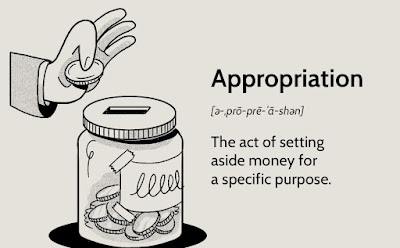
The Appropriations Committee in Congress is a powerful body responsible for determining how federal government funds are allocated and spent. This committee is responsible for creating the annual federal budget, and for allocating funds to various government agencies, programs, and initiatives. One of the key responsibilities of the Appropriations Committee is to determine how much funding each government agency and program will receive each year. This involves reviewing agency budgets and proposals, consulting with subject matter experts, and considering the needs and priorities of the American people. The committee also plays a role in determining how taxpayer dollars are spent, and may make recommendations for redirecting funds to better serve the needs of the American people. In addition to allocating funds, the Appropriations Committee also plays a critical role in shaping government policy. The committee may review proposed legislation, hold public hearings, and make recommendati...

Ethics Committee

Image
The Ethics Committee in Congress, also known as the House Committee on Ethics and the Senate Select Committee on Ethics, is a critical component of our legislative branch's accountability framework. This committee is responsible for overseeing the ethical conduct of Members of Congress, and for ensuring that they are adhering to the highest standards of ethics and integrity in their official duties. One of the primary responsibilities of the Ethics Committee is to receive, review, and investigate allegations of ethical misconduct by Members of Congress. This may involve looking into cases of financial impropriety, conflicts of interest, or other violations of ethics rules and laws. The committee may also provide guidance to Members of Congress on ethical issues and concerns, and may make recommendations for improving ethical conduct within the legislative branch. In addition to its role in investigating ethical misconduct, the Ethics Committee also plays a critical role in promotin...

The Oversight and Accountability Committee in Congress

Image
The Oversight and Accountability Committee in Congress is a powerful body tasked with ensuring that government agencies are operating effectively and efficiently, and that taxpayer dollars are being used appropriately. This committee is responsible for conducting investigations into government operations, reviewing agency budgets and programs, and making recommendations for improving government performance. One of the key responsibilities of the Oversight and Accountability Committee is to investigate instances of waste, fraud, and abuse within government agencies. This may involve reviewing reports of mismanagement, looking into cases of corruption or unethical behavior, or examining the use of taxpayer dollars in government contracts and grants. The committee also plays a role in holding government officials accountable for their actions, and may recommend disciplinary action or even criminal charges in cases of serious wrongdoing. Another important function of the Oversight and Acco...

Permanent Select Committee on Intelligence (AKA: The Intelligence Committee)

Image
The Intelligence Committee in Congress, also known as the House Permanent Select Committee on Intelligence (HPSCI) and the Senate Select Committee on Intelligence (SSCI), is a committee responsible for overseeing the intelligence activities of the United States government. These committees play a vital role in ensuring that the intelligence community is working effectively and efficiently to protect the national security interests of the country. In recent years, the Intelligence Committee has been involved in a number of high-profile investigations and activities. For example, the HPSCI conducted an investigation into the 2016 Russian election interference and the potential collusion between the Russian government and the Trump campaign. The SSCI also conducted a review of the intelligence community’s assessment of the threat posed by Iran’s nuclear program. The Intelligence Committee also plays a critical role in the authorization and funding of the intelligence budget. This includes...

What Do All of These "Committees," in Congress Actually Do?

Image
As you may have heard, the allocation of committee seats in Congress is a topic of much discussion. The House Republican Majority holds the power to determine who stays, who goes, and who is newly appointed to these coveted positions. But what exactly are these committees and what is their purpose in Congress? Allow me to delve deeper into the workings of one of the most influential committees, the Judiciary Committee. The Judiciary Committee in Congress is a powerful body with a broad range of responsibilities. Its primary function is to oversee the administration of justice within the federal government and to consider legislation related to the judicial branch. In this article, we will explore the role of the Judiciary Committee and its impact on the American justice system. The Judiciary Committee is responsible for considering and reporting on a wide range of legislation related to the federal courts, criminal law, immigration, and civil rights. This includes bills that establish ...